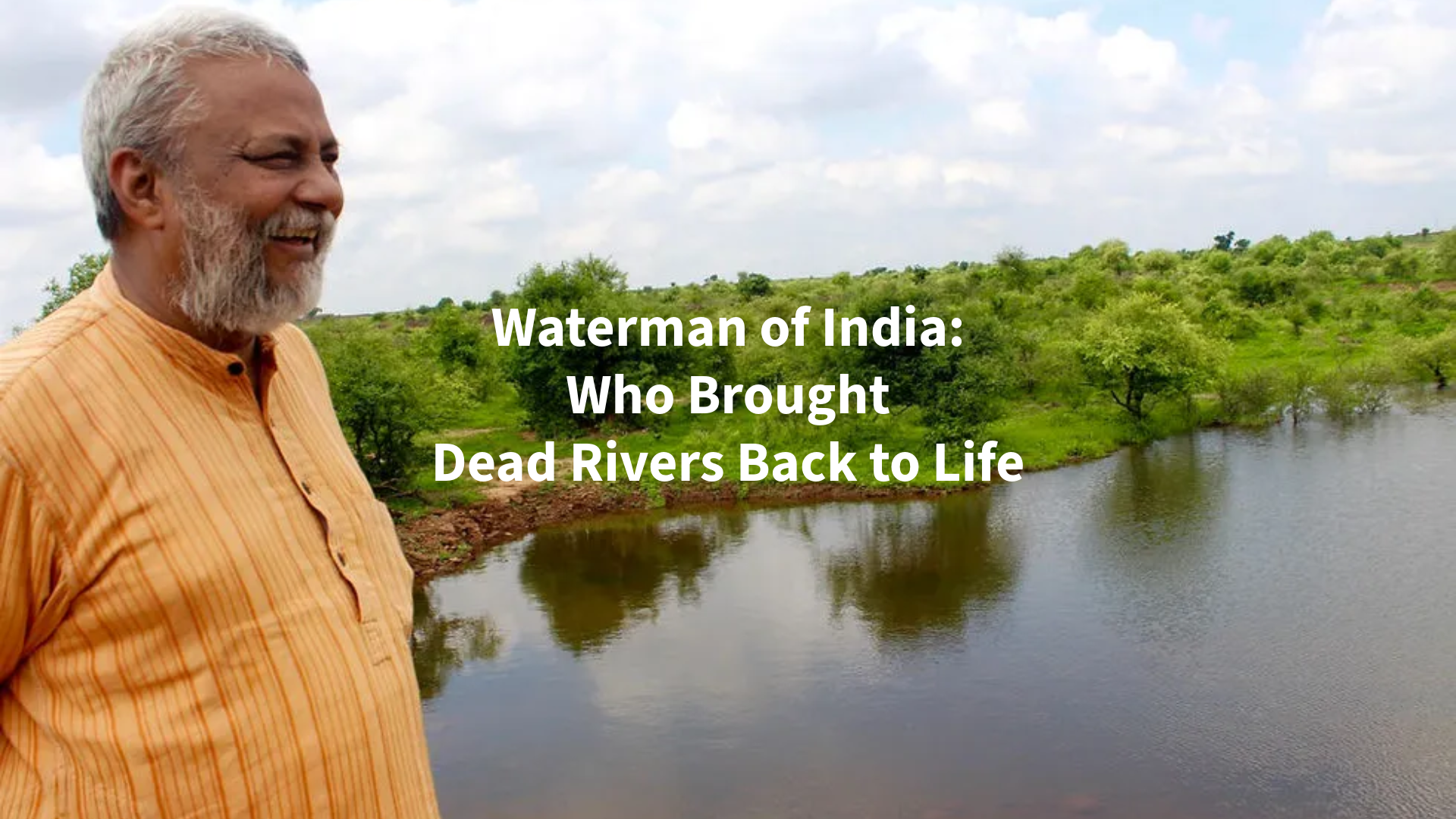
Water is synonymous with life, yet millions of Indians struggle daily to access clean and adequate water. With a rapidly growing population, climate change, and decreasing groundwater levels, India is among the countries facing severe water crises in the world. Amid this challenge stands a legendary figure known as the “Waterman of India”, Dr. Rajendra Singh, a pioneer of water conservation in India. His initiatives in water rejuvenation have transformed thousands of drought-hit villages and inspired a national movement towards sustainable water management.
Who is Dr. Rajendra Singh?
Dr. Rajendra Singh is a renowned Indian water conservationist from Rajasthan. He earned the title Waterman of India for reviving traditional water harvesting practices and restoring life in several dry regions of the country. An Ayurvedic doctor by profession, Singh moved to Alwar in Rajasthan in 1980. He noticed the extreme drought in the area and started working with local communities to rebuild johads (traditional check dams), recharge groundwater, and bring back lost rivers. In 1985 he left his Government job, founded his NGO, Tarun Bharat Sangh, and dedicated himself completely to the water conservation practice.
His dedicated grassroots activism has:
- Revived 11 rivers in Rajasthan
- Restored water supply in over 1,000 villages
- Boosted agriculture and rural livelihoods
- Earned him the prestigious Stockholm Water Prize (2015), often called the Nobel Prize for water
Rajendra Singh’s initiatives prove that water conservation is not just a government responsibility, it is a people’s movement.
Water Scarcity in India: The Growing Crisis
India holds 18% of the world’s population but only 4% of global freshwater resources. Studies suggest that:
- 21 major Indian cities may run out of groundwater soon
- Nearly 600 million Indians already face water crisis
- Over 70% of water sources are contaminated
Climate change, over-extraction of ground water, rapid industrialization, and poor planning have turned water scarcity into a national emergency.
Importance of Water Conservation in India
Conserving water is vital for the nation’s future. Key reasons include:
1️ Ensuring Drinking Water Security
Millions lack safe drinking water. Conservation protects this basic human need.
2 Supporting Agriculture and Food Security
India’s agriculture depends heavily on groundwater. Saving water ensures stable crop production and farmer welfare.
3️ Reviving Rivers and Groundwater
Sustainable harvesting techniques help replenish natural water cycles.
4️ Reducing the Impact of Climate Change
Better water management helps communities survive droughts, floods, and irregular monsoons.
5️ Protecting Ecosystems and Biodiversity
Healthy water systems maintain forests, soil, and wildlife habitats.
Lessons from the Waterman of India
Dr. Rajendra Singh promotes community participation as the heart of water conservation. His guiding principles are:
- Use traditional wisdom with modern techniques
- Collect rainwater where it falls
- Empower local communities to manage their water resources
- Restore nature rather than over-engineering it
These practices have helped villages regain prosperity, reduce migration, and improve quality of life.
How We Can Contribute to Water Conservation
Every citizen can make a difference by:
- Installing rainwater harvesting at homes and buildings
- Preventing water leakage and wastage
- Choosing water-efficient appliances
- Supporting watershed development projects
- Planting more trees to improve groundwater recharge
- Raising awareness about responsible water use
Small steps, when taken by millions, create a massive positive impact.
Conclusion
India’s future depends on how wisely we manage our water resources today. Dr. Rajendra Singh, the Waterman of India, has shown that a water-secure country is possible through collective action, traditional knowledge, and sustainable development. Protecting every drop is not just an environmental concern, it is essential for our survival, economy, and generations to come.
Let us conserve water today for a better tomorrow.



Leave a Reply