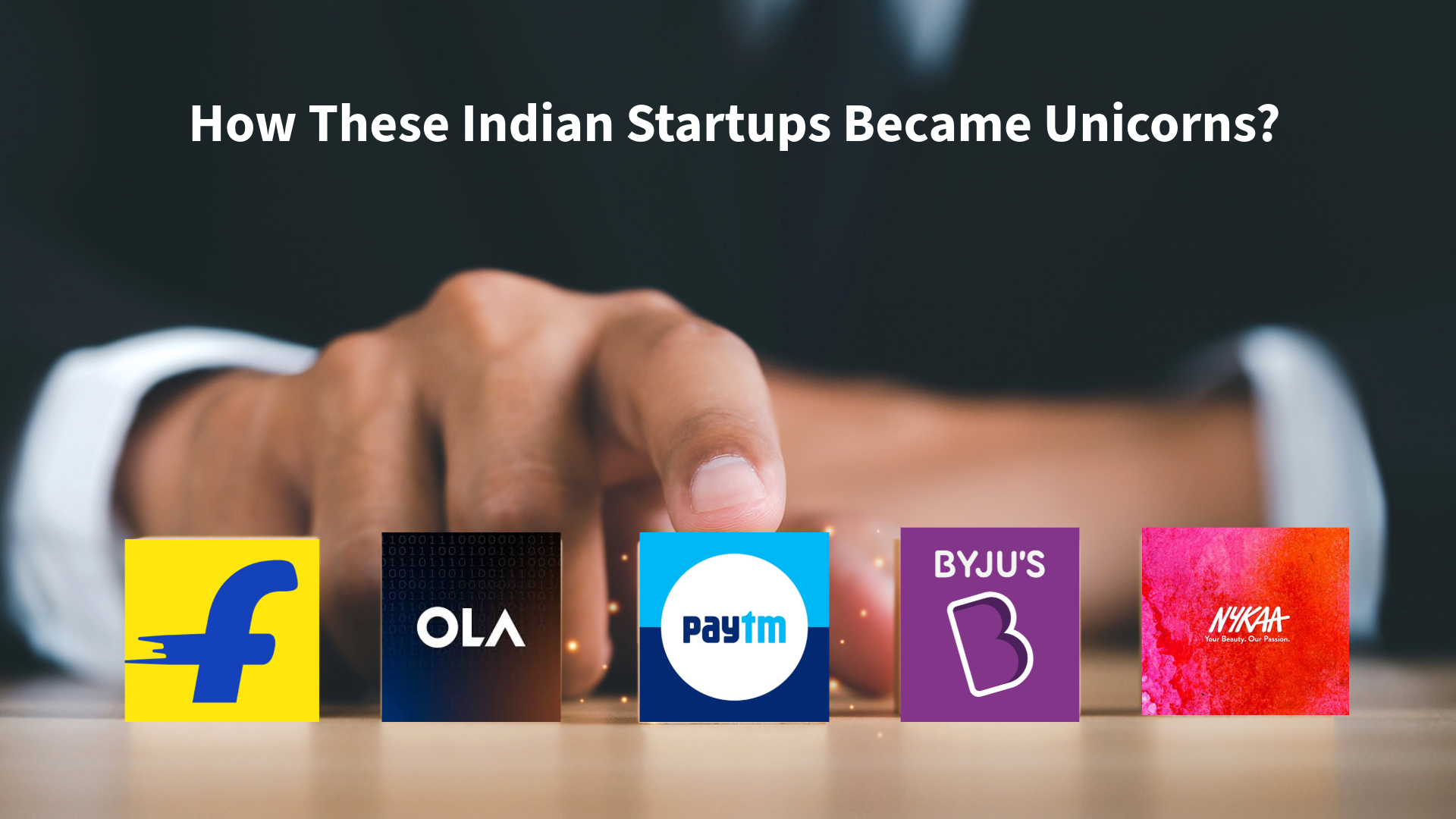
Every unicorn begins with a moment; quiet, uncertain, almost invisible.
A founder staring at a problem. A risk taken when stability seemed safer. A belief that refuses to fade. The Indian startup ecosystem is filled with such moments. Behind every billion-dollar valuation is a story of grit, timing, and smart execution.
Let’s step into the journeys of India’s most iconic unicorns, not just what they built, but how they made it happen.
1. Flipkart – The Night The Founder Delivered a Book Himself
In 2007, two former Amazon employees started selling books online from a small apartment. In the early days, when an order came in, one founder would rush to a bookstore, buy the book, pack it, and deliver it.
But India wasn’t ready. People didn’t trust online payments.
The Turning Point:
They introduced Cash on Delivery.
The Impact Story:
This one decision broke the biggest barrier, trust. Flipkart didn’t just build an e-commerce company; it built India’s confidence in online shopping.
Strategy Insight: Solve behavioral problems, not just business problems.
Capital & Revenue
From ₹4 Lakh to a $16 Billion Exit
Starting Capital: ₹4–5 lakh (self-funded by founders)
Fundraising Journey:
- Early backing from Accel Partners and Tiger Global
- Multiple funding rounds scaling into billions
- Acquired by Walmart in 2018 for ~$16 billion
Present Revenue: ₹56,000+ crore annually (approx.)
2. Ola – A Road Trip That Changed Everything
Founder Bhavish Aggarwal once booked a cab for a trip but was abandoned midway by the driver after a fare dispute. In a country where transport was unpredictable, Ola saw an opportunity.
Founder Bhavish Aggarwal’s terrible taxi experience sparked the idea.
The Realization:
India didn’t lack taxis, it lacked reliability.
The Impact Story:
Instead of competing with taxis, Ola organized them—bringing structure to chaos.
Bold Move:
Ola onboarded drivers aggressively, even helping them with loans to buy cars.
Hidden Insight:
Ola didn’t just build an app—it built an ecosystem for drivers.
Strategy Insight: Transform unorganized markets into scalable platforms.
Capital & Revenue:
Starting Capital: ~₹30–50 lakh (bootstrap + early angel funding)
Fundraising Journey:
- Backed by SoftBank, Tiger Global, and others
- Raised over $4 billion across rounds
Present Revenue: ₹2,100+ crore annually (approx.)
3. Paytm – From Mobile Recharge to Money Movement
Before becoming a fintech giant, Paytm was just a mobile and DTH recharge platform launched in 2010 under One97 Communication by Vijay Shekhar Sharma. By 2014, it launched Paytm Wallet.
During demonetization in 2016, while the country faced a cash crisis, Paytm’s servers were overwhelmed with new users.
The Defining Moment:
Instead of slowing down, they scaled aggressively, capturing millions of users.
Hidden Insight:
Success often comes from being prepared before the opportunity arrives.
The Impact Story:
From roadside vendors to large businesses, Paytm became synonymous with digital payments almost overnight.
Strategy Insight: Be ready to scale instantly when opportunity strikes.
Capital & Revenue:
Starting Capital: $2 million (initial investment by founder Vijay Shekhar Sharma)
Fundraising Journey:
- Major investments from SoftBank, Alibaba, Ant Group
- One of India’s largest IPOs in 2021
Present Revenue: ₹8,000+ crore annually (approx.)
4. Zomato – Turning Menus into a Movement
It started as a simple idea, upload restaurant menus online.
The idea started when employees struggled to read restaurant menus in office cafeterias.
Originally launched as “Foodiebay” in 2008 by IIT Delhi Graduate Deepinder Goyal and Pankaj Chaddah. They renamed it to “Zomato” in 2010, giving a zingy touch Tomato.
The First Step:
Menus were scanned and uploaded online, simple, but powerful.
The Shift:
Zomato evolved from discovery to delivery.
Bold Branding Move:
Zomato’s witty notifications and social media posts became viral conversation starters.
Hidden Insight:
Sometimes, billion-dollar ideas begin with small everyday inconveniences.
The Impact Story:
With bold branding and witty content, Zomato didn’t just serve food—it built a personality people loved.
Strategy Insight: Build a brand people relate to, not just a service.
Capital & Revenue:
Starting Capital: Minimal—bootstrapped in early days
Fundraising Journey:
- Early investor: Info Edge (Naukri.com)
- Raised $2B+ over time
- Successful IPO in 2021
Present Revenue: ₹7,000+ crore annually (approx.)
5. BYJU’S – From Stadium Classes to Screens
A teacher who loved explaining concepts turned classrooms into screens.
Byju Raveendran once taught thousands of students in a stadium-like classroom before going digital.
The Moment:
Byju Raveendran’s offline classes gained massive popularity before going digital.
The Turning Point:
Students didn’t just learn, they enjoyed learning.
Strategic Leap:
Transitioning from offline teaching to a tech-driven learning platform.
Hidden Insight:
BYJU’S didn’t sell education, it sold engagement and confidence.
The Impact Story:
By combining storytelling with technology, BYJU’S made learning engaging and scalable.
Strategy Insight: Turn education into experience.
Capital & Revenue:
Starting Capital: Self-funded teaching model
Fundraising Journey:
- Backed by Sequoia, Chan Zuckerberg Initiative, Tencent
- Raised billions in multiple rounds
Present Revenue: ₹5,000–8,000 crore annually (varies)
6. Nykaa – Starting at 50, Winning a Young Market
Falguni Nayar started Nykaa at the age of 50—when most people consider slowing down.
The Challenge:
Convincing customers to trust online beauty products in a counterfeit-heavy market.
Smart Move:
Content + commerce, tutorials, influencer collaborations, and authenticity.
Hidden Insight:
Nykaa proved that credibility can outperform competition.
When Nykaa started, beauty products online lacked authenticity.
The Moment:
Falguni Nayar focused on genuine products and strong brand partnerships.
The Impact Story:
Nykaa became a trusted destination, especially for women exploring beauty online.
Strategy Insight: In crowded markets, trust is your biggest differentiator.
Capital & Revenue:
Starting Capital: ₹2 crore (founder’s own investment)
Fundraising Journey:
- Backed by TPG Growth, Fidelity
- IPO in 2021 with strong listing
Present Revenue: ₹6,000+ crore annually (approx.)
7. Swiggy – Betting Big on Delivery Boys
Food delivery existed, but was unreliable. Restaurants initially resisted delivery partnerships due to inconsistency.
The Move:
This Indian startup built its own delivery network instead of depending on restaurants.
The Impact Story:
This control ensured speed and consistency, winning customer loyalty.
The Bold Strategy:
Swiggy built its own delivery fleet, controlling the entire experience.
The Result:
Faster deliveries, happier customers, stronger retention.
Hidden Insight:
Owning logistics turned Swiggy from a service into a reliable habit.
Strategy Insight: Own the critical part of the value chain.
Capital & Revenue:
Starting Capital: $2 million seed funding
Fundraising Journey:
- Backed by SoftBank, Prosus, Accel
- Raised $3B+
Present Revenue: ₹8,000+ crore annually (approx.)
8. Razorpay – Rejected, Then Relentless
Payments for businesses were complicated and fragmented. Businesses struggled with complicated payment gateways. Razorpay founders were initially rejected by a startup accelerator.
The Breakthrough:
They built a simple, developer-friendly solution.
The Result:
Today, Razorpay powers payments for thousands of startups.
The Moment:
Razorpay simplified integration for startups and SMEs.
The Impact Story:
By making payments seamless, it became the backbone for thousands of businesses.
Strategy Insight: Simplify complexity to unlock massive demand.
Capital & Revenue:
Starting Capital: $120,000 (Y Combinator + early funding)
Fundraising Journey:
- Backed by Y Combinator, Sequoia, GIC
- Raised $700M+
Present Revenue: ₹2,000+ crore annually (approx.)
The Hidden Pattern Behind Indian Startup Unicorns
When you look closely, these aren’t just success stories, they are decision stories:
- A founder delivering a book personally
- A bad cab ride turning into a billion-dollar idea
- A crisis becoming a growth explosion
- A simple menu turning into a global platform
Final Thought
Behind every Indian startup unicorn is not just a billion-dollar idea, but a billion small decisions made right.
Because in the end, startups don’t become unicorns by chasing success…
They become unicorns by creating value people can’t live without.


Leave a Reply